Showing posts with label book review. Show all posts

Thursday, August 18, 2016

Book Review: Making Etched Metal Jewelry


Cover Making Etched Metal Jewelry by Kristen Robinson and Ruth Rae

Maybe you missed this book when it came out like I did, or you have recently become interested in learning how to etch metal ? Or you like mixed media jewelry with a bohemian twist.  In any of these cases, you will find Making Etched Metal Jewelry, Techniques and Projects, Step by Step, by Kristen Robinson and Ruth Rae, a good introduction to the techniques of etching and the construction of many inspiring jewelry projects ( there are 17 to choose from.)   Etching metal is almost magical and is a great way to give your handmade pieces a unique one of a kind look as you can see in the samples here from the cover of the book.
 4 examples of projects in the book 

The book begins with the specific techniques involved in etching metal.  The authors have chosen to focus on the two most frequently used methods:  etching with Ferric Chloride and etching with Muric Acid and Hydrogen Peroxide.  Since both methods involve the use of chemicals that require special precautions in order to be used safely, I want to be sure to draw your attention to the safety guidelines that have been clearly stated on page 8.    In addition, it is important to note that the methods discussed are only suitable for Brass, Copper and Nickel Silver. 
Besides teaching how to etch metal, the book also addresses a number of metal working and beading techniques to help you make its many mixed media and bohemian style projects.  You will find  information on tools to use to, supplies needed, basic wire wrapping techniques for attaching beads to your work and specific instructions on how to use a circle cutter, dap a metal disk into a dome, how to use a jeweler's saw, and how to use 3 different kinds of patinas and more.

For me the strength of this book is the special ways that etching can personalize your jewelry. Using just a black Sharpie permanent marker you can write on metal and etch whatever words you want to have on your creation.  No need to reverse the text and use a complicated procedure to get what you want to say on your piece.  
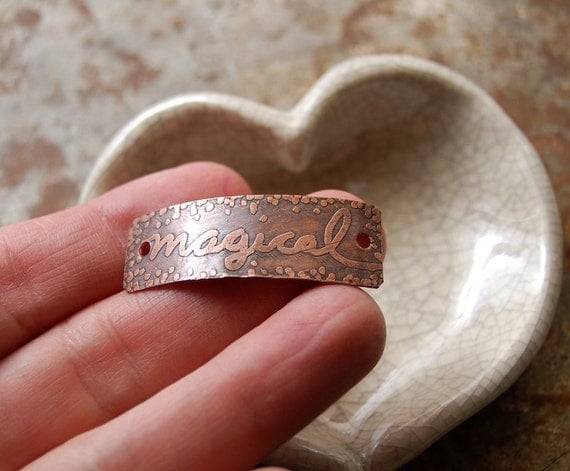
Pre-Order / Etched Copper Curved Bars - Original Drawings on Copper - Made to Order  by Gaea
You can use Stazone permanent black to ink up one of your own handmade rubber stamps or a commercial one to get an image on your metal and it will come out etched. And that Sharpie marker is also great for drawing on metal and designing your very own bead caps, tube beads, disks and pendants.
 Circle disks stamped with Stazone ink and etched; Tube beads drawn on with permanent black Sharpie marker and etched. by MaryHardingJewelry

Another aspect of etching that I learned about in this book is making etched metal chain links. You will find several different handmade chain styles using etched links featured in  the projects.  What a great idea for enhancing your jewelry.  I can't wait to try my hand at making some.

I hope you have found this look at Making Etched Metal Jewelry helpful and intriguing.  You can get it at your local bookstore or on Amazon .  The Amazon site allows you to have a "look inside" so you can see even more pictures and features of this publication.  For more examples of jewelry using etched metal components, you can visit my Pinterest Board.

Thanks so much for stopping by today.
Mary

posted by Mary Harding


Saturday, August 22, 2015

Book Review: Handcrafted Metal Findings by Denise Peck and Jane Dickerson


I think this is a wonderful book for both the novice and advanced jewelry designer and maker.  It is good for those just starting out in metal because of the skills and equipment you do NOT need to have, like saws, drills, and big tank torches.  It is great for the more advanced person because of the great artistry in the projects chosen to be included:  30 in all as it says on the cover.  The projects include links, clasps, bails, end caps, ear wires, beads, head pins, and bead tabs.  To me this book was written to enhance handmade art beads. 
Let's take a look and see.  For example, Cindy Wimmer's  Twisted Tunnel Bail ( page 60 looks so great with  handmade metal art beads wrapped in wire.  I love the play set up between the two different wire textures and how they enhance each other.

Wrapped open pod bead with feather by Mary Harding Jewelry

Keirsten Giles' Poppy Bead Caps, featured on the cover of the book (see first picture above)  would be a fabulous match with many of the earring drops from 
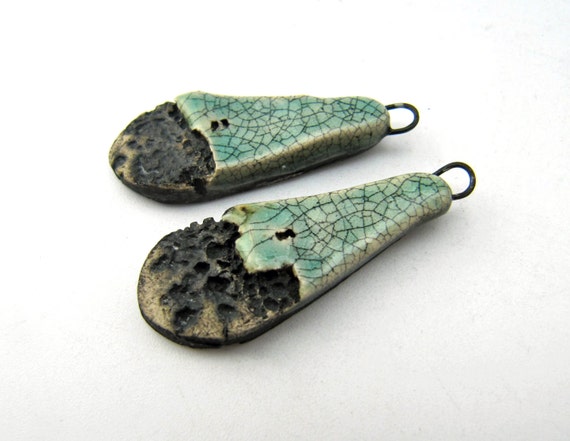
Claire Lockwood of Something to do Beads 

Scorched and Tattered Drop Earring Charms
Scorched and Tattered Ear Ring Drops by Claire Lockwood of Something to do Beads
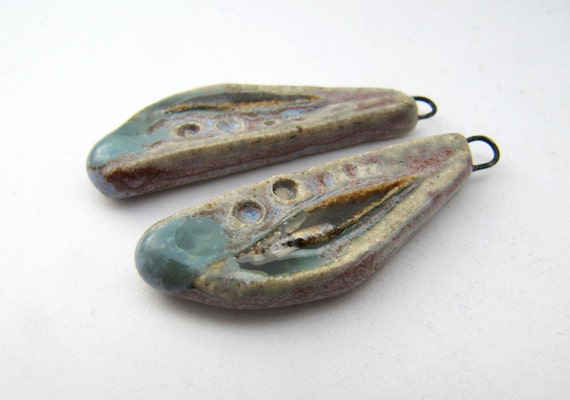
Watercolour Wing Charms
                WaterColor Ear Ring Charms by Claire Lockwood of Something to do Beads

I think that the Accordian Link on page 27 designed and made by Jane Dickerson has so much potential when used with art beads, and it introduces you to a very cool tool, the Tube Wringer.


This tool produces a corrugated texture that you can then turn into all sorts of fun findings for your work.  You insert a strip of metal into the corrugating jaws and crank the handle.  Pretty easy to use.  It is quite inexpensive, only  $24.95.  Available at Rio Grande and Rings and Things.

The Accordian Link can be made in a variety of base metals as well as in Sterling Silver, as illustrated.   Like all of the projects in this book, the step by step instructions with pictures are excellent and easy to follow.
Who doesn't love these tiny decorative links designed by Denise Peck?  I tried them out in copper and silver and see endless ways of being creative with them.( pictured on the cover above-- top right)
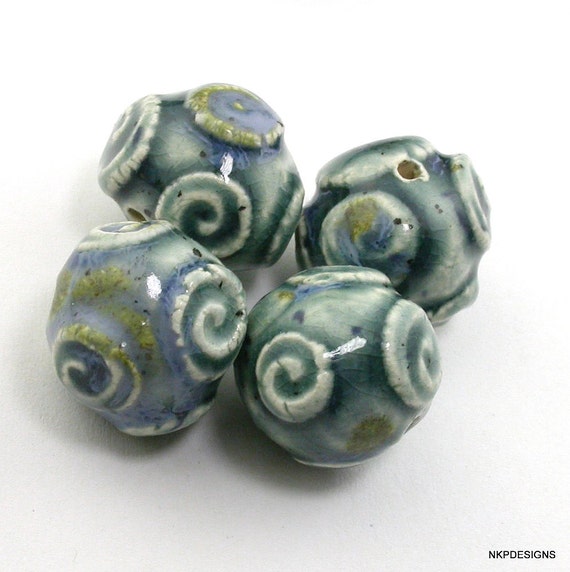
They would look so great strung with these art beads by NKP Designs
Teal Blues Swirl Sprig Ceramic Beads
                                    Ceramic art beads by NKPDesigns

Denise Peck's Speak to Me Ear Wires

                                    Speak to Me Ear Wires by Denise Peck

would be a great match with some of Claire Maunsell pods like these:

                                              Pod beads by Claire Maunsell


I  hope I have whet your appetite for knowing more about this timely and versatile book and how you can use these metal findings and make them your own with art beads.  You can shop for Handcrafted Metal Findings on Amazon and at the publisher  Interweave.
Thanks so much for stopping by!!!
Mary


Thursday, May 14, 2015

Book Round Up: The History of Beads

Necklace given to me made with  beads from Mexico

With all the current interest in tribal beads and getting back to a simpler more primitive bead style, I have been taking out some of my books on the history of beads and looking at them again.  Haven't done this in quite a few years.  Thinking you may be interested in the subject too, I have gathered together a number of books on the subject for today's post.


Let's begin with Peter Francis, Jr.'s book Beads of the World.  It happens by chance that one of the most important early collector of beads and researcher into the history of beads, Peter Francis, Jr. lived not too far from where I live.  His Center for Bead Research was located in Lake Placid.   Although I never met Peter Francis, I did support his website called TheBeadSite. There on his website I found interesting articles about beads and pictures of many beads I had never seen before. Peter died in 2002 while on a research trip to Ghana. However, his website is still maintained. You can find many very interesting articles there about beads from all over the world. Fortunately, his collection was donated to the Bead Museum in Arizona.  Peter's book Beads of the World is still available on  Amazon .  Although the book is designed for someone interested in collecting beads, it is comprehensive and covers beads from many countries beginning with the earliest beads   He has chapters on The Use of Beads; Bead Materials:  organic, stone, glass; each of these chapters include the earliest beads made and the techniques used to make them. In addition to his contribution to the history of beads, Peter Francis was also instrumental in establishing Bead Societies.  He is often quoted as extending the definition of a bead to "anything that has a hole in it and is worn"  and for his mantra "it's not about the beads, it's about the people."  He believed that the study of beads was the study of humanity:  the people who made the beads, the people who traded them and the people who used them and loved them and saved them so that they are still here today.  We as bead makers, designers and lovers of beads are all part of the amazing history of beads.

One of the main contributors to the early research into bead history, according to Peter Francis Jr., is Joan Mowat  Erikson who wrote, the now classic book,  The Universal Bead.  I have had a copy of this book for a long time.  I especially like her chapters on Bead Magic and The Meaning of Beads.  Erikson looks into the history of the connection between beads and eyes  She discusses the use of beads to protect peoples in numerous cultures from the "evil eye."  She talks of the universal appeal of beads almost as if it were wired into our neurological makeup.  One early example of this connection, she suggests, is in the Eye Goddess of Syria pictured below and the Egyptian symbol of the  Eye of Horus.


and finally she shows us an example of this link in the Japanese character for bead and the pupil of the eye.


Africa Adorned by  Angela Davis is a photographic journey into the the jewelry and bodily adornment of Africa.  Angela Davis spent 7 years making this book.  It contains a wealth information and beautiful color photographs.  It is still available but may be out of print. It is most likely available  in your local library. I have included a few pictures below taken from my copy of the book.

Cover of the book  Africa Adorned

Sacred jewelry of iron and stone

                                           More sacred iron and stone jewelry

                       Bella herdsmen jewelry made with contemporary items from the marketplace

Berber Fibula


Turkana bead work made from  natural objects like shell, horn, bone, hair, wood, roots, seeds. and grass
                                                           ***********

The following are some more books that belong in a history of beads (these are books I would like to have someday): I have highlighted them with links to Amazon and a couple of them let you "look inside."


The History of Beads: From 30,000 B.C. to the Present (Beadwork Books) Paperback – Deluxe Edition, September 1, 1995 

 by Lois Sherr Dubin  (Author)

A Bead Timeline, Vol. I: Prehistory to 1200 CE Paperback – August, 2003by James W. Lankton  (Author)


Collectible Beads: A Universal Aesthetic (Beadwork Books) Hardcover– July, 1995by Robert K. Liu  (Author)


I hope you have enjoyed this brief  list of books on the history of beads and that is has piqued your interest.  In going over this material today, it has brought to mind questions for me to think about when making art beads and using them in jewelry:  how does what I make relate to my beliefs, my sense of place, my sense of community, my intrinsic need to see with my eyes and my hands, and finally how do they give me and others a sense of joy and beauty.

Thanks so much for stopping by.
Mary

Tuesday, February 24, 2015

Book Review: Free Form Peyote Stitch Book Roundup


With the publication of Karen Williams' new book Explorations in Free Form Peyote Beading, I am excited to see that freeform peyote stitch is getting on people's radar.  It is wonderful that  more and more folks are taking up beading with seed beads. To me, freeform peyote, is the ultimate fun and the greatest design generator of all the seed beading techniques out there.  So I am very excited about this new volume in  freeform peyote beading because it is going to make this beading format available to many more people.   For years there was a dearth of information on freeform peyote stitch.  I remember back in the late 90's when I was smitten with a freeform peyote stitch necklace I saw in Bead and Button magazine, that I had a hard time finding any information on how to make  one.  Finally I found the self published booklet by Jeannette Cook titled A Sculptural Peyote Projects Primer, and ordered a copy. It had originally been published in 1996 and was later revised in 2001.  It is a wonderful book and taught me all I  needed to know to start making those great cuffs and  necklaces.  But it only had pictures on the front and back covers.

 I still refer to this slim bible on freeform despite its black and white beading path illustrations because I find it to be very simple to understand and those few illustrations very inspiring.

                     Back cover of A Sculptural Peyote Projects Primer by Jeannette Cook

In 2000, Interweave Press published Beading with Peyote Stitch written by Jeannette Cook and Vicki Starr. Although most of this book is about flat, even and odd count, and tubular peyote, and sculptural peyote, there are some sections that cover freeform,  And there are many color illustrations.  This book has been a staple for many years for anyone wanting to learn peyote stitch beading techniques.


After the publication of the Interweave book,  it seemed freeform languished for a number of years until Karen Williams revitalized the scene with her book Freeform Peyote Beading in 2010.  Her 2010 book was full of color photos, beading diagrams and lots of information on design and color.  Karen filled a huge gap in the freeform beading knowledge base with this book

    One of my favorite techniques that I learned from Karen Williams is how to integrate the button and clasp loop into the bracelet as seen in the picture below of one of my bracelets.

And now, we have Karen Williams' newest book, Explorations in Freeform Beading, which continues the adventure and delves even deeper into being creative with freeform peyote stitch.  Not only is this a great resource and inspiration for anyone interested in freeform, it is a testament to the power of self publishing.  Karen set up a Kickstarter campaign to get this book up and running and was very successful at gathering the necessary funds and community support.  And equally important, she had the skills and the stamina to see this project through in the short year that she allowed herself to get it ready.  It is now available on Amazon and in her Etsy shop.  And most recently, she has gotten the ebook version off the ground!
 One of the significant differences between Karen Williams' two books is the inclusion of work by other bead artists in this one.  In fact, she gives in depth coverage to several so that you are learning how different artists create using free form peyote stitch.  Many of the roadblocks that discourage beaders new to peyote stitch are  addressed, especially the "ugly duckling stage" that most projects go through, and how to incorporate large stones, bead over found objects and more.
The other main difference is the attention paid to more advance freeform beading techniques making the book a valuable resource for beaders of all skill levels.
If you have an interest in advancing your freeform skills, or want to begin on a new adventure in freeform this book will teach and inspire you for many years to come. I hope you will check it out at your local bookstore, library, or favorite internet shop.

Saturday, November 22, 2014

Book Review: The Beader's Guide to Jewelry Design by Margie Deeb

 The Fundamentals of Jewelry Design for Bead Artists by Margie Deeb

Whether you are a seasoned bead designer, just beginning, or somewhere in the middle, I think you will find lots to love in Margie Deeb's newest book, The Fundamentals of Jewelry Design for Bead Artists.  Beautifully illustrated, full of explicit examples and dynamite practical information, this book seems to cover it all.
Let's start with the structure which follows the process of jewelry design itself.  Her chapters go as follows:
Unity
Focal Points & Emphasis
Balance
Movement
Shape
Color
Jewelry and the Body
The Creative Journey

Within each chapter there are at least 12 subheadings ( with the exception of Color, Deeb's known specialty, and that one has 24)  that break down the subject into its important components with specific examples and opportunities for the reader to get involved in design decisions. And even better, each section ends with Challenge Yourself exercises that give you several ways of exploring each design concept further in your own work. Margie gives us specific "assignments" that will sharpen our skills in each learning area.  You are free to work your way through the book or pick out areas that you feel would be most helpful to you.

In addition to the challenges, there are many graphics through out the book that she gives us permission to copy, enlarge etc. for personal use.  For example, in the chapter Shape, she has drawings that we can practice seeing how a design would look by drawing it right on the human form.  In the chapter, Jewelry and the Body she includes 17 pages of images, drawings and charts of how jewelry and body shape interact .  These are an invaluable resource.

One of my favorite chapters is The Creative Journey.  Here Deeb addresses that universal "elephant in the room" fear and doubt, with specific, constructive suggestions.  She deepens the discussion with ideas for nurturing and encouraging our creativity by showing us how to structure  our creative process through her own examples and those she has gleaned from 8 other jewelry designers, many of whom you will know.

I hope I have given you enough information to see that The Beader's Guide to Jewelry Design can have an important place in your personal library.  You can purchase it directly from the publisher,  Lark Books, or online at  Amazon, or Barnes and Noble.

Thank you  for stopping by.
Mary